
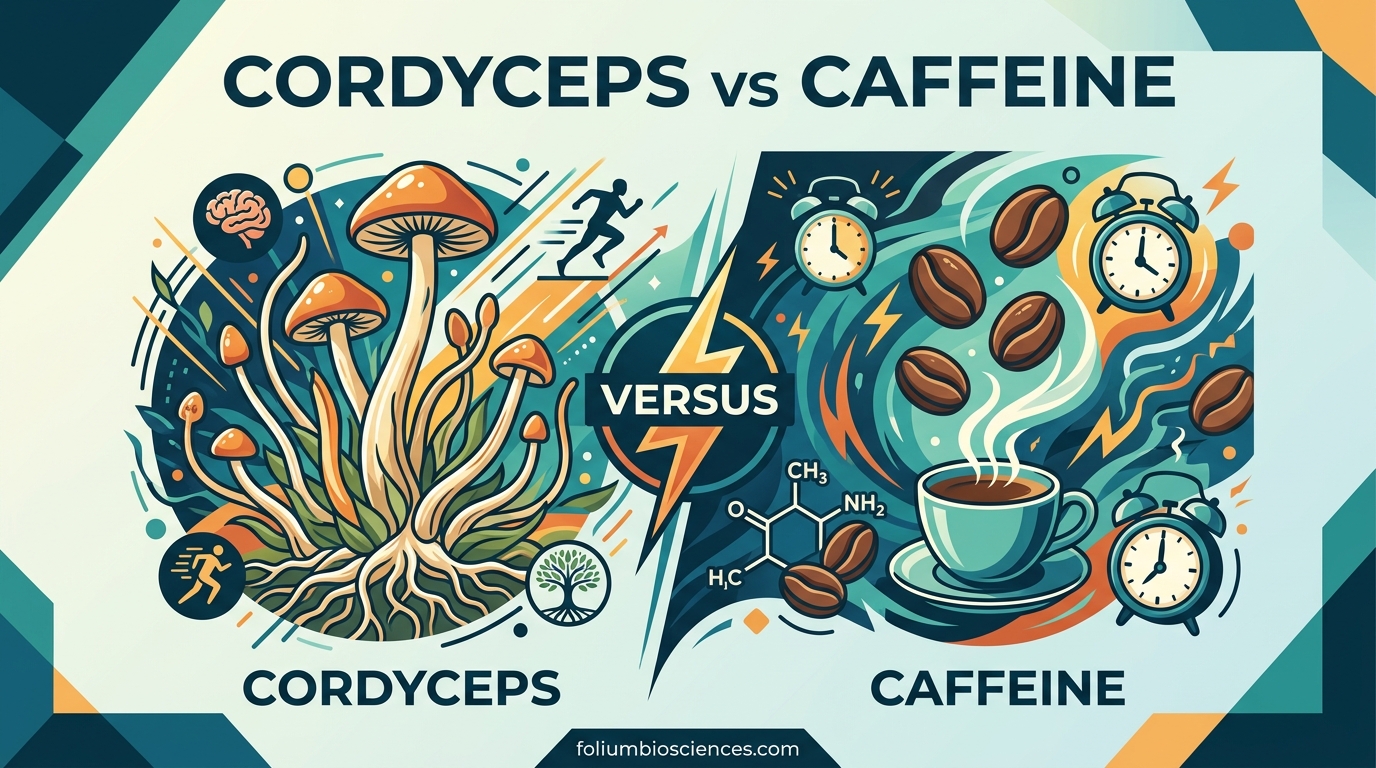
Millions of people start their day with coffee, only to crash by mid-afternoon and struggle to sleep at night. If you are tired of the caffeine rollercoaster, Cordyceps offers a fundamentally different approach to energy that works with your body instead of against it.
Cordyceps vs caffeine is not just about choosing one over the other. It is about understanding how each compound affects your energy systems and deciding which approach fits your lifestyle. I have spent months researching functional mushrooms and their effects on performance, and the science behind Cordyceps energy production is genuinely fascinating.
This guide compares Cordyceps and caffeine side by side. You will learn how each works at the cellular level, what to expect from daily use, and who benefits most from switching to a caffeine-free energy supplement. By the end, you will know whether Cordyceps deserves a place in your routine.
Table of Contents
What Is Cordyceps and How Does It Work for Energy
Cordyceps is a functional mushroom used in traditional Chinese and Tibetan medicine for centuries. Unlike the stimulating effects of caffeine, Cordyceps supports your body’s natural energy production through a completely different mechanism. The two main species used in supplements are Cordyceps militaris and Cordyceps sinensis, with militaris being more common in modern products due to sustainable cultivation methods.
The energy benefits of Cordyceps come from its ability to enhance cellular energy production. Research shows that Cordyceps increases adenosine triphosphate (ATP) production, which is the primary energy currency your cells use to power every function in your body. More ATP means your muscles, brain, and organs have access to more fuel without relying on external stimulants.
Cordyceps also improves oxygen utilization and VO2 max, which measures how efficiently your body uses oxygen during exercise. Studies on athletes have demonstrated improved endurance and reduced fatigue when supplementing with Cordyceps regularly. This makes it particularly valuable for endurance athletes, cyclists, and anyone looking to sustain energy through long workdays.
Another key mechanism involves supporting mitochondrial function. Mitochondria are the power plants inside your cells, and Cordyceps helps them operate more efficiently. Rather than forcing your nervous system into overdrive, Cordyceps creates the conditions for natural, sustained energy production that lasts throughout the day.
What Is Caffeine and How Does It Work for Energy
Caffeine is the world’s most widely consumed psychoactive substance, found naturally in coffee beans, tea leaves, and cacao. It works by blocking adenosine receptors in your brain. Adenosine is a neurotransmitter that builds up throughout the day and signals your body to feel tired. When caffeine blocks these receptors, you feel alert and awake because your brain cannot receive the tiredness signals.
This mechanism explains why caffeine provides such rapid results. Within 15 to 45 minutes of consumption, most people feel more alert and focused. The effects peak around one hour after consumption and can last anywhere from three to seven hours depending on your metabolism. Caffeine’s half-life averages about five hours, meaning half the caffeine you consume at 8 AM is still circulating at 1 PM.
However, there is an important distinction to understand. Caffeine does not actually create energy in your body. It borrows alertness from your future self by masking fatigue signals. When the caffeine wears off, the accumulated adenosine floods back into your receptors, often resulting in the familiar afternoon crash. Your body has not actually produced more energy, it has simply delayed the perception of tiredness.
Regular caffeine consumption also leads to tolerance and dependency. Your brain adapts by creating more adenosine receptors, requiring higher doses to achieve the same effect. This is why daily coffee drinkers often need multiple cups to feel functional and experience withdrawal symptoms like headaches and irritability when they skip their usual dose.
Cordyceps vs Caffeine: How They Compare in Mechanism
The fundamental difference between Cordyceps and caffeine comes down to building versus borrowing. Cordyceps helps your body generate more ATP energy through improved cellular respiration and oxygen utilization. Caffeine blocks adenosine receptors to temporarily hide fatigue signals. One approach supports your natural energy systems, while the other overrides them.
Here is a clear comparison of how each affects your energy:
ATP Production: Cordyceps directly supports mitochondrial ATP generation, providing your cells with more energy currency. Caffeine has no effect on ATP production.
Oxygen Utilization: Cordyceps improves VO2 max and oxygen uptake efficiency, which benefits both athletic performance and mental clarity. Caffeine does not enhance oxygen utilization.
Onset Time: Caffeine works within 15 to 45 minutes for immediate alertness. Cordyceps requires consistent use over 7 to 14 days before cumulative benefits become noticeable.
Duration: Caffeine effects last 3 to 7 hours followed by a crash. Cordyceps provides sustained energy throughout the day without peaks or crashes.
Sleep Impact: Caffeine significantly disrupts sleep quality even when consumed early in the day. Cordyceps does not interfere with sleep and may even support better rest.
Dependency Risk: Caffeine creates tolerance and physical dependency with regular use. Cordyceps shows no evidence of causing dependency or withdrawal.
Side Effects: Caffeine commonly causes jitters, anxiety, increased heart rate, and digestive issues. Cordyceps has minimal reported side effects at standard doses.
The comparison table below summarizes these differences:
| Factor | Cordyceps | Caffeine |
|---|---|---|
| Primary Mechanism | ATP production support | Adenosine receptor blocking |
| Energy Type | Sustained cellular energy | Temporary alertness |
| Onset Time | 7-14 days cumulative | 15-45 minutes |
| Duration | All-day support | 3-7 hours then crash |
| Sleep Impact | None, may improve sleep | Significant disruption |
| Dependency Risk | None known | High with daily use |
| Jitters/Anxiety | Rare | Common |
Benefits and Drawbacks of Cordyceps and Caffeine
Cordyceps Benefits
The primary advantage of Cordyceps is sustained energy without the typical caffeine side effects. Users report steady daily energy levels without the afternoon crashes that send people reaching for their second or third cup of coffee. This makes Cordyceps ideal for anyone seeking caffeine-free energy support.
Athletes particularly benefit from Cordyceps because of its impact on oxygen utilization and endurance. Studies show improved VO2 max and reduced fatigue during extended exercise. The functional mushroom energy support extends to mental clarity as well, with users reporting better focus without the overstimulation that can make concentration difficult.
Cordyceps does not disrupt sleep, which is a game-changer for anyone who has ever laid awake at night regretting that 3 PM espresso. Since it works through cellular support rather than nervous system stimulation, you can take Cordyceps any time of day without worrying about restlessness at bedtime.
Additional benefits include immune support, which Cordyceps has been traditionally used for, and potential stress adaptation properties. Some research suggests Cordyceps may help modulate cortisol levels, supporting a more balanced stress response.
Cordyceps Drawbacks
The main drawback of Cordyceps is that it is not an instant fix. Unlike caffeine, which works within minutes, Cordyceps requires consistent daily use for one to two weeks before most people notice significant effects. This can lead some users to conclude it is not working when they simply need more time.
Cordyceps also lacks the immediate stimulation that many people associate with energy. If you are looking for that buzzy, alert feeling that coffee provides, Cordyceps will not deliver it. The energy is more subtle and background, supporting your natural rhythms rather than overriding them.
Quality varies significantly between Cordyceps supplements. Since the mushroom supplement industry is less regulated than pharmaceuticals, some products contain minimal active compounds. Choosing a reputable brand with third-party testing is essential for getting actual benefits.
Caffeine Benefits
Caffeine excels at providing rapid, reliable alertness when you need it most. The fast onset makes it perfect for situations requiring immediate focus, like early morning meetings or deadline crunches. Decades of research confirm caffeine’s effectiveness at improving reaction time, vigilance, and short-term cognitive performance.
Coffee and tea offer social and ritual benefits beyond the chemical effects. The morning coffee routine, the afternoon tea break, these cultural practices provide psychological energy that purely functional supplements cannot replicate. For many people, the habit itself is as important as the caffeine.
Caffeine is also incredibly accessible and affordable. Quality coffee or tea costs pennies per serving compared to functional mushroom supplements. You can find caffeine virtually anywhere, making it convenient for travel or unpredictable schedules.
Caffeine Drawbacks
The caffeine crash is real and well-documented. When the adenosine blocking wears off, the accumulated tiredness hits hard, often accompanied by irritability and difficulty concentrating. This creates a cycle where you need more caffeine to recover from the previous dose’s crash.
Sleep disruption is another major issue. Even caffeine consumed six hours before bedtime can significantly reduce sleep quality. Poor sleep then leads to more fatigue the next day, requiring more caffeine to compensate. It is a vicious cycle that many people never break.
Common side effects include jitters, anxiety, increased heart rate, digestive discomfort, and increased blood pressure. People with anxiety disorders or heart conditions often need to avoid or severely limit caffeine. The stimulating effects can also worsen symptoms for those with certain medical conditions.
Who Should Choose Cordyceps vs Caffeine
Cordyceps is the better choice for several specific groups. Endurance athletes and anyone engaged in sustained physical activity will benefit from the improved oxygen utilization and ATP production. The energy without jitters makes it ideal for long training sessions where consistent output matters more than short bursts of intensity.
People with caffeine sensitivity should strongly consider Cordyceps. If you experience anxiety, rapid heartbeat, or digestive issues from coffee, Cordyceps offers energy support without those side effects. The caffeine-free energy boost is gentle on your nervous system while still providing meaningful benefits.
Anyone struggling with the afternoon energy slump but unable to consume more caffeine will find Cordyceps valuable. Since it does not interfere with sleep, you can take it later in the day when energy naturally dips. Users report smoother transitions through the day without the dramatic peaks and valleys of caffeine.
Those looking to reduce caffeine dependency can use Cordyceps as a bridge. By supporting your natural energy systems, Cordyceps makes it easier to cut back on coffee without experiencing the typical withdrawal symptoms and productivity crashes.
Caffeine still makes sense for situations requiring immediate alertness. If you need to wake up quickly for an early flight or power through a late-night project, caffeine’s rapid onset is unbeatable. Occasional strategic use of caffeine while relying on Cordyceps for daily baseline energy is a smart hybrid approach.
Can You Combine Cordyceps with Caffeine
Yes, you can combine Cordyceps with caffeine, and many people find this stack particularly effective. The two compounds work through different mechanisms, meaning they complement rather than conflict with each other. Forum discussions in communities like r/MushroomSupplements show this is a popular approach among biohackers and athletes.
The stacking strategy typically involves using Cordyceps as your daily baseline energy support while reserving caffeine for when you truly need a boost. This approach gives you the sustained benefits of cellular ATP production while maintaining the option for rapid alertness when deadlines demand it.
Some users report that Cordyceps actually smooths out caffeine’s rough edges. The sustained energy from Cordyceps can reduce the jittery feeling and crash associated with coffee, making the caffeine experience more pleasant. Others find they need less caffeine to achieve the same alertness when also taking Cordyceps regularly.
For timing, most users take Cordyceps in the morning with breakfast for all-day support. Caffeine is then used strategically, perhaps before a workout or important meeting. Since Cordyceps does not affect sleep, you have more flexibility with your daily energy management.
Start with a lower caffeine dose when first combining the two to see how your body responds. Everyone’s biochemistry is different, and the interaction effects, while generally positive, can vary between individuals.
Frequently Asked Questions
Is Cordyceps better than caffeine?
Cordyceps is better for sustained, natural energy without crashes or sleep disruption. Caffeine is better for immediate alertness. For daily energy management without dependency, Cordyceps is superior. For rapid wakefulness, caffeine works faster.
Does Cordyceps really give you energy?
Yes, Cordyceps supports real energy production by enhancing cellular ATP generation and oxygen utilization. Studies show improved endurance and reduced fatigue with consistent use. Unlike caffeine, it does not mask tiredness but instead supports your body’s natural energy systems.
What is a good energy booster without caffeine?
Cordyceps is an excellent caffeine-free energy booster. Other options include Rhodiola rosea, ginseng, creatine, and B vitamins. Cordyceps stands out for its research-backed effects on ATP production and oxygen utilization without the side effects of stimulants.
What are the downsides of taking Cordyceps?
Cordyceps requires 7-14 days of consistent use before effects become noticeable, which can frustrate those expecting immediate results. Quality varies between supplements, so choosing a reputable brand matters. Some users report mild digestive discomfort initially. Cordyceps does not provide the stimulating buzz that caffeine users might miss.
Does Cordyceps make you tired?
No, Cordyceps does not make you tired. It supports sustained energy throughout the day. Some users initially feel calmer as their nervous system adjusts to functioning without constant caffeine stimulation, but this is not actual fatigue. Improved sleep quality from reduced caffeine use can also change how tiredness feels initially.
Does caffeine affect Cordyceps?
Caffeine does not negatively interact with Cordyceps. The two work through different mechanisms and can be used together. Caffeine blocks adenosine receptors while Cordyceps supports ATP production. Many users stack them successfully, using Cordyceps for baseline energy and caffeine for specific situations requiring immediate alertness.
Can Cordyceps lower cortisol?
Some research suggests Cordyceps may help modulate cortisol levels and support stress adaptation. While not primarily a cortisol-lowering supplement, its adaptogenic properties may help balance the stress response. This could contribute to the sustained energy benefits many users report, as chronically elevated cortisol can cause fatigue.
How long does Cordyceps take to work?
Most people notice Cordyceps benefits after 7 to 14 days of consistent daily use. Some users report subtle improvements in energy within the first week, while maximum benefits for endurance and oxygen utilization typically appear after 2 to 4 weeks. Unlike caffeine, Cordyceps works cumulatively rather than providing immediate effects.
Conclusion
Cordyceps vs caffeine is not really a competition but a choice between two different approaches to energy. Caffeine borrows alertness from your future self by blocking tiredness signals, while Cordyceps supports your body’s natural ability to generate sustainable energy through enhanced ATP production and oxygen utilization.
For anyone tired of the caffeine crash cycle, struggling with sleep disruption, or seeking a caffeine-free energy boost, Cordyceps offers a genuine alternative backed by traditional use and modern research. The key is patience, Cordyceps requires consistent use before benefits appear, but the sustained energy without side effects makes it worth the wait.
Consider trying Cordyceps for a month while gradually reducing your caffeine intake. You might discover that natural energy feels better than borrowed alertness. And if you occasionally need that coffee boost for a deadline or early flight, combining both gives you the best of both worlds.