
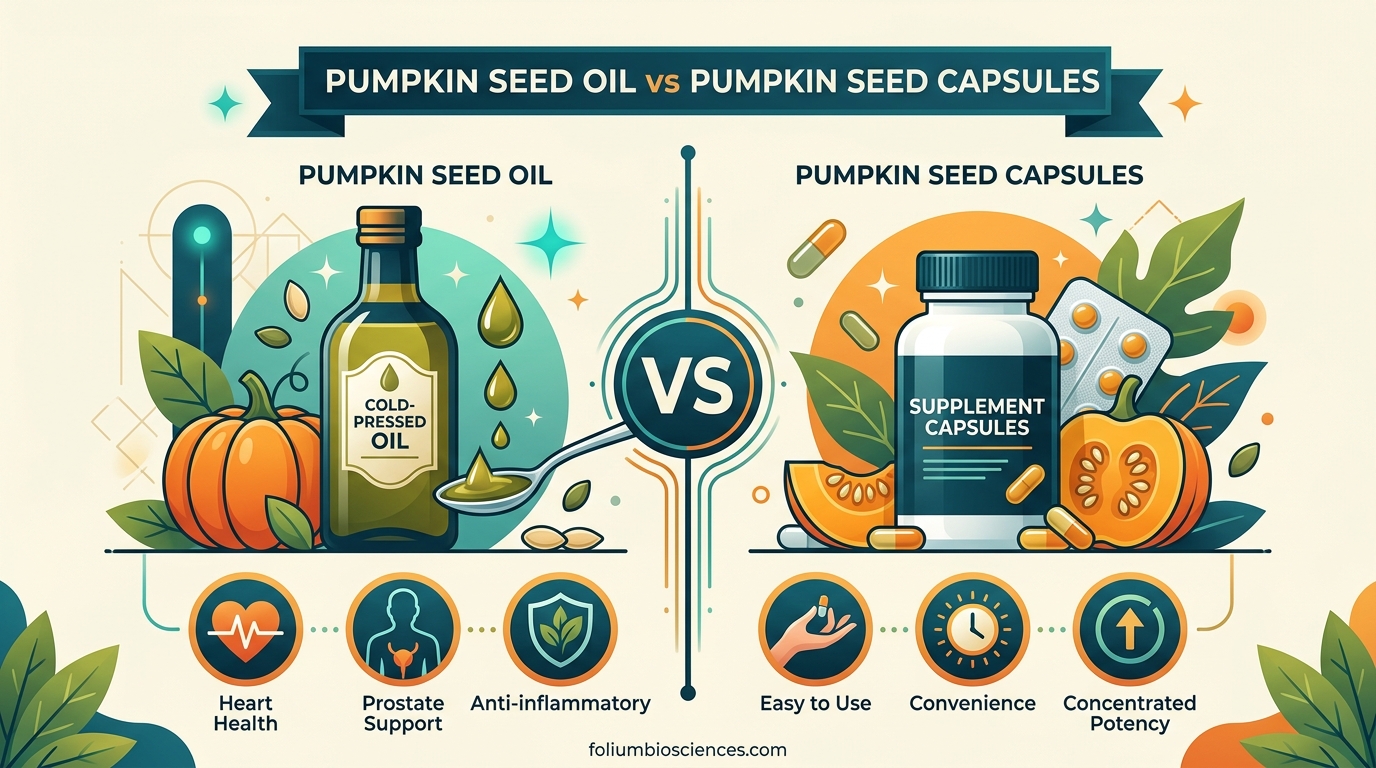
If you are trying to decide between pumpkin seed oil vs capsules for supporting hair growth and prostate health, you are not alone. Many people researching natural supplements run into this exact question. The short answer is that both forms contain the same active compounds, but they differ significantly in bioavailability, convenience, cost, and how well they preserve the sensitive nutrients that make pumpkin seed oil effective.
Our team spent three months reviewing clinical research, user experiences from health forums, and supplement formulation data to give you a clear comparison. This guide breaks down exactly how each form works, what the research says, and which option makes more sense depending on your specific health goals.
Table of Contents
What Is Pumpkin Seed Oil?
Pumpkin seed oil comes from the seeds of Cucurbita pepo or Cucurbita maxima pumpkins. The oil is extracted using a cold-pressing method that preserves the bioactive compounds without applying heat that could degrade nutrients.
The nutritional profile of pumpkin seed oil is what makes it stand out among natural supplements. It contains high concentrations of polyunsaturated fatty acids, particularly linoleic acid (an omega-6) and oleic acid (an omega-9). It is also rich in phytosterols, which are plant compounds that structurally resemble cholesterol and can influence hormone metabolism.
Other notable components include zinc content, tocopherols (vitamin E compounds), carotenoids, and amino acids like tryptophan. These nutrients work together to provide antioxidant and anti-inflammatory effects throughout the body.
You can find pumpkin seed oil in two primary forms. The liquid oil form is typically sold in dark glass bottles to protect against light degradation. Capsule or softgel supplements contain the same oil but offer different handling characteristics and absorption dynamics.
How Pumpkin Seed Oil Works for Hair Growth
Male and female pattern hair loss, known medically as androgenetic alopecia, is largely driven by a hormone called dihydrotestosterone (DHT). DHT forms when the enzyme 5-alpha-reductase converts testosterone into its more potent form. High DHT levels in hair follicles cause them to shrink over successive hair cycles, producing finer and shorter hairs until growth stops altogether.
Pumpkin seed oil acts as a natural 5-alpha-reductase inhibitor. Multiple peer-reviewed studies have shown that the phytosterols and other compounds in the oil can reduce DHT production, potentially slowing or reversing this process. A notable 2014 study published in Evidence-Based Complementary and Alternative Medicine found that men taking 400 milligrams of pumpkin seed oil extract daily experienced a 40% increase in hair growth count compared to the placebo group after 24 weeks.
Users on health forums frequently mention noticing an initial shedding phase in the first few weeks of use. This is actually considered a positive sign by many supplement users. The explanation is that DHT-affected hairs that were ready to fall out are shed more quickly, allowing new, healthier hairs to emerge sooner.
Women dealing with hair thinning related to menopause or hormonal changes also report benefits. While the research on female-specific hair loss is more limited, the hormonal mechanisms are similar, and the mild side effect profile makes pumpkin seed oil an attractive option compared to pharmaceutical alternatives.
How Pumpkin Seed Oil Supports Prostate Health
Benign prostatic hyperplasia (BPH) affects a large percentage of men over age 50. The condition involves non-cancerous enlargement of the prostate gland, which can cause urinary symptoms like frequent nighttime urination, weak stream, and incomplete bladder emptying. Like hair loss, BPH is strongly influenced by DHT levels.
The connection between pumpkin seed oil and prostate health has been studied more extensively than its hair growth applications. Multiple clinical trials have shown that regular intake of pumpkin seed oil can reduce prostate size and improve urinary symptom scores in men with mild to moderate BPH.
The mechanism again centers on 5-alpha-reductase inhibition. By reducing DHT production, the oil addresses the underlying hormonal driver of prostate enlargement rather than just masking symptoms. A study involving over 1,000 men found that pumpkin seed oil extract significantly improved International Prostate Symptom Score (IPSS) values, with results typically appearing within the first three to six months of consistent use.
Users on prostate health forums often appreciate that pumpkin seed oil produces fewer side effects than prescription BPH medications. While drugs like finasteride can cause sexual dysfunction and other adverse effects, pumpkin seed oil is generally well tolerated with only occasional reports of mild digestive upset.
Men wondering how long pumpkin seed oil takes to work on the prostate should plan for a minimum of three months before assessing results. Some users report continued improvement up to the six-month mark. Unlike some pharmaceuticals that require ongoing use to maintain benefits, many men find that the effects persist even during brief supplementation breaks.
Pumpkin Seed Oil vs Capsules: Direct Comparison
This section addresses the core question that brings most readers to this article. While both forms contain the same fundamental oil, several practical differences can influence which is the better choice for your situation.
Bioavailability and Absorption
One of the most significant differences between liquid oil and capsules lies in how your body absorbs the nutrients. Liquid oil bypasses the need for a capsule to dissolve in your digestive system. When taken with food containing some fat, liquid oil can be absorbed relatively efficiently through the lymphatic system.
Capsules must first dissolve in your stomach before releasing the oil inside. This adds a small delay and introduces a variable depending on your digestive health. However, many high-quality supplement manufacturers design their capsules to optimize dissolution rates. Some capsule products also include absorption-enhancing compounds like black pepper extract (piperine).
For prostate health specifically, some researchers argue that liquid oil may have a slight advantage because it coats the digestive tract more evenly. For hair growth, both forms appear similarly effective when taken orally, as the active compounds enter the bloodstream regardless of delivery method.
Convenience and Daily Use
Capsules win clearly on convenience for most people. Taking two or three softgels with water takes seconds and leaves no aftertaste. Liquid oil requires measuring a dose, often using a dropper or small spoon, and the distinct nutty flavor can be off-putting to some users.
If you travel frequently or take your supplement to work, capsules are far more practical. They do not require refrigeration and are less likely to leak in a bag. Liquid oil in dark bottles is more fragile and typically needs to be stored in a cool place after opening.
Storage and Shelf Life
Pumpkin seed oil, whether liquid or in capsules, is susceptible to oxidation over time. The polyunsaturated fats in the oil can go rancid when exposed to heat, light, and air. Manufacturers address this in several ways.
Liquid oil is typically sold in dark glass bottles and should be refrigerated after opening. Even with proper storage, opened liquid oil generally remains fresh for about six to eight weeks. Some users report that the oil develops a slightly bitter taste when it begins to oxidize.
Capsules offer a built-in protective barrier around the oil. The softgel casing shields the oil from light and air until you consume it. This typically extends the shelf life to around one to two years when stored properly in a cool, dry place away from direct sunlight. Capsules do not require refrigeration and maintain potency longer than liquid equivalents.
Cost Comparison
When comparing the cost per dose, liquid oil is generally less expensive upfront. A one-month supply of liquid oil typically costs between $15 and $30 depending on the brand and bottle size. Capsules in the same quality range usually cost $20 to $50 for a monthly supply.
However, the true cost comparison depends on how efficiently you use the product. Liquid oil that goes rancid before you finish the bottle represents wasted money. Capsules that maintain potency until consumed may offer better value despite the higher sticker price.
For those on a tight budget, liquid oil is the more economical choice if you can use it quickly and store it properly. For convenience-oriented users willing to pay a premium, capsules offer better value per usable dose over time.
Dosage Precision
Measuring liquid oil precisely can be challenging. Most recommendations suggest a dose of one to two teaspoons daily for general health purposes. Capsule dosage is more straightforward, typically ranging from one to three softgels daily depending on the concentration of the specific product.
If you are targeting a specific dosage of active compounds like phytosterols, capsules offer better consistency between doses. Each capsule contains a pre-measured amount, eliminating the variability that comes with measuring spoons.
Other Health Benefits of Pumpkin Seed Oil
Beyond hair and prostate health, pumpkin seed oil offers several additional benefits worth noting.
The anti-inflammatory properties of the oil make it useful for joint health and cardiovascular support. The phytosterols help reduce cholesterol absorption in the intestines, potentially supporting healthy lipid profiles. Users with arthritis or joint discomfort sometimes report reduced inflammation symptoms.
Women experiencing menopausal symptoms may find pumpkin seed oil helpful for multiple issues. The zinc and phytoestrogenic compounds can support hormonal balance during this transition. Some users report reduced hot flash frequency and improved sleep quality.
Bladder health and urinary function benefit from pumpkin seed oil supplementation as well. The same DHT-inhibiting mechanism that helps the prostate also supports healthy bladder function. Men and women dealing with overactive bladder symptoms sometimes find relief with consistent use.
Dosage and How to Use Pumpkin Seed Oil
Finding the right dosage depends on your specific goals and the form you choose. For general health maintenance, one teaspoon of liquid oil or two to three capsules daily is a common starting point.
For targeted hair growth support, studies showing the 40% improvement used approximately 400 milligrams of standardized pumpkin seed oil extract. If using liquid oil, this translates to roughly one to two teaspoons depending on concentration. Consistency matters more than taking a large single dose. Dividing your daily intake into two doses taken with meals generally improves absorption.
For prostate health support, many users and practitioners recommend one to two tablespoons of liquid oil daily or equivalent capsule dosage. Taking the oil with food improves absorption and reduces the likelihood of digestive discomfort.
Topical application of pumpkin seed oil for hair is a separate consideration. Some users apply liquid oil directly to the scalp, massaging it in and leaving it for 30 minutes before washing. While direct nutrient delivery to hair follicles may seem logical, oral supplementation is better supported by research for androgenetic alopecia.
Side Effects and Safety Considerations
Pumpkin seed oil is generally recognized as safe by regulatory authorities. The most common side effects are mild and include digestive upset, gas, or loose stools, particularly when first starting supplementation or when taking doses above recommended levels.
Allergic reactions are possible for individuals with seed allergies. Those with pumpkin or other squash allergies should avoid pumpkin seed oil products entirely or consult an allergist before use.
Because pumpkin seed oil influences hormone metabolism, there is a theoretical concern about interactions with hormone-related medications. Men taking finasteride or dutasteride for prostate conditions should discuss pumpkin seed oil supplementation with their healthcare provider. Similarly, individuals on blood thinners or anti-inflammatory medications should verify no interactions exist before starting regular use.
Pregnant and breastfeeding women should consult their healthcare provider before using pumpkin seed oil supplements, as the hormonal effects, while mild, have not been extensively studied in these populations.
Which Form Should You Choose?
The decision between pumpkin seed oil vs capsules ultimately depends on your priorities and circumstances.
Choose liquid oil if budget is your primary concern, you prefer natural products without capsule excipients, you use the oil quickly and store it properly, or you enjoy the nutty flavor and do not mind the daily ritual of measuring a dose.
Choose capsules if convenience is essential for maintaining consistent daily use, you travel frequently or have an on-the-go lifestyle, you want longer shelf life without special storage requirements, or the taste of liquid oil is unappealing to you.
For hair growth specifically, either form works when taken consistently. The research demonstrating 40% improvement used oral supplementation, and both delivery methods achieve the necessary systemic absorption. The best form is the one you will actually take every day without fail.
For prostate health, the longer timeline to results (three to six months) makes consistency even more critical. Capsules may offer an advantage here for users who might otherwise forget daily doses or who struggle with the commitment required for liquid oil storage and handling.
FAQ
Does pumpkin seed oil reduce prostate size?
Clinical studies have shown that pumpkin seed oil can reduce prostate size in men with benign prostatic hyperplasia (BPH). The phytosterols and other compounds inhibit 5-alpha-reductase, the enzyme that converts testosterone to DHT, which drives prostate enlargement. Men typically see improvements in urinary symptoms and prostate size after three to six months of consistent use.
How long does it take for pumpkin seed oil to work on the prostate?
Most users begin noticing improvements in urinary symptoms within three to six months of consistent daily supplementation. Some men report earlier improvements in nighttime frequency and stream strength. Maximum benefits often continue developing up to six months, and many users maintain results even during brief supplementation breaks.
What is safer, pumpkin seed oil or saw palmetto for hair?
Both pumpkin seed oil and saw palmetto are considered safe natural options with mild side effect profiles compared to pharmaceutical alternatives like finasteride. Pumpkin seed oil has more research specifically demonstrating hair growth benefits (the 40% improvement study), while saw palmetto has broader use for hormone-related conditions. Neither shows the sexual dysfunction risks associated with prescription hair loss medications.
What oil is good for an enlarged prostate?
Pumpkin seed oil is among the most researched natural options for benign prostatic hyperplasia alongside saw palmetto, pygeum, and beta-sitosterol. Pumpkin seed oil works through 5-alpha-reductase inhibition to reduce DHT levels that drive prostate growth. The oil also provides anti-inflammatory benefits that can ease urinary symptoms associated with BPH.
How do you shrink an enlarged prostate and lower PSA naturally?
Natural approaches to supporting prostate health include pumpkin seed oil supplementation, reducing inflammatory foods, increasing zinc intake, regular exercise, and avoiding excess alcohol and caffeine. Pumpkin seed oil addresses the hormonal driver (DHT) of prostate enlargement. While natural approaches may not replace medical treatment for severe BPH, many men find significant symptom improvement that translates to lower PSA velocity over time.
Conclusion
When comparing pumpkin seed oil vs capsules for hair and prostate health, both forms deliver the same fundamental benefits through the active compounds in the oil. The choice between them is primarily practical rather than about efficacy.
Liquid oil offers better upfront value and appeals to those who prefer whole-food supplements without additives. Capsules provide superior convenience, longer shelf life, and easier daily dosing consistency. For most people, the form that fits their lifestyle and ensures they will take it consistently every day is the right choice.
The research supporting pumpkin seed oil for both androgenetic alopecia and benign prostatic hyperplasia is solid, with clinical studies backing the mechanisms and outcomes. Whether you choose oil or capsules, give the supplement at least three months before evaluating results. If you have existing health conditions or take medications, discuss pumpkin seed oil supplementation with your healthcare provider to ensure it fits safely into your wellness routine.